
Unplanned Theatre Returns

Definition & why we measure

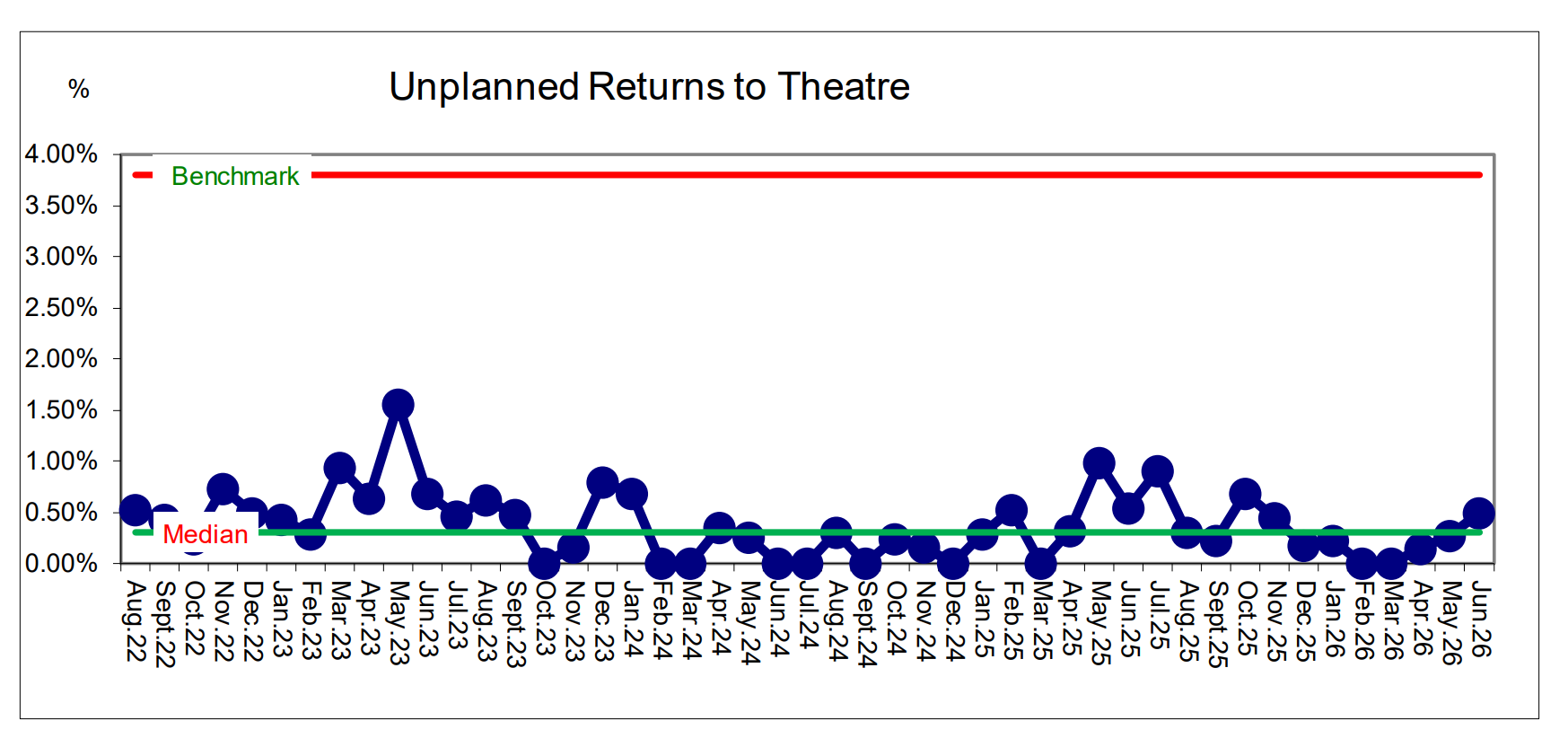
These are unscheduled in-theatre repeat surgeries due to adverse event after the initial surgery. They are due immediate or delayed complications.¹ When they occur, they have a direct emotional, cost and safety implication to the patient.

This measure forms an important trigger tool as an indicator of the quality of the surgical treatment and risk management.¹ Tracking the rends on this measure enables us identify areas of improvement therefore improving the quality of care

What are we doing to improve?

The hospital aims at getting it right first time, to have successful surgeries on the first attempt without complications. This is the expectation on all staff to include the consultants. The hospital has a rigorous process for credentialling the surgical consultants. An individualized ongoing professional practice evaluation is performed for all surgeons using a criterion that includes feedback on adverse events outcomes from the surgeries with an aim to improve practise.

Note: the lower the number the better the performance.

Reference:

  1. Griffin FA, Classen DC. Detection of adverse events in surgical patients using the Trigger Tool approach. Qual Saf Health Care. 2008 Aug;17(4):253-8. doi: 10.1136/qshc.2007.025080. PMID: 18678721
  2. Marini H, Merle V, Derrey S, et al Surveillance of unplanned return to the operating theatre in neurosurgery combined with a mortality–morbidity conference: results of a pilot survey BMJ Quality & Safety 2012;21:432-438.
  3. Pujol N, Merrer J, Lemaire B, Boisrenoult P, Desmoineaux P, Oger P, Lebas C, Beaufils P. (2015) Unplanned return to theater: A quality of care and risk management index? Orthop Traumatol Surg Res. Jun;101(4):399-403. doi: 10.1016/j.otsr.2015.03.013. Epub 2015 May 4. PMID: 25952709.

Book Appointment