
Length of Stay

Definition & why we measure

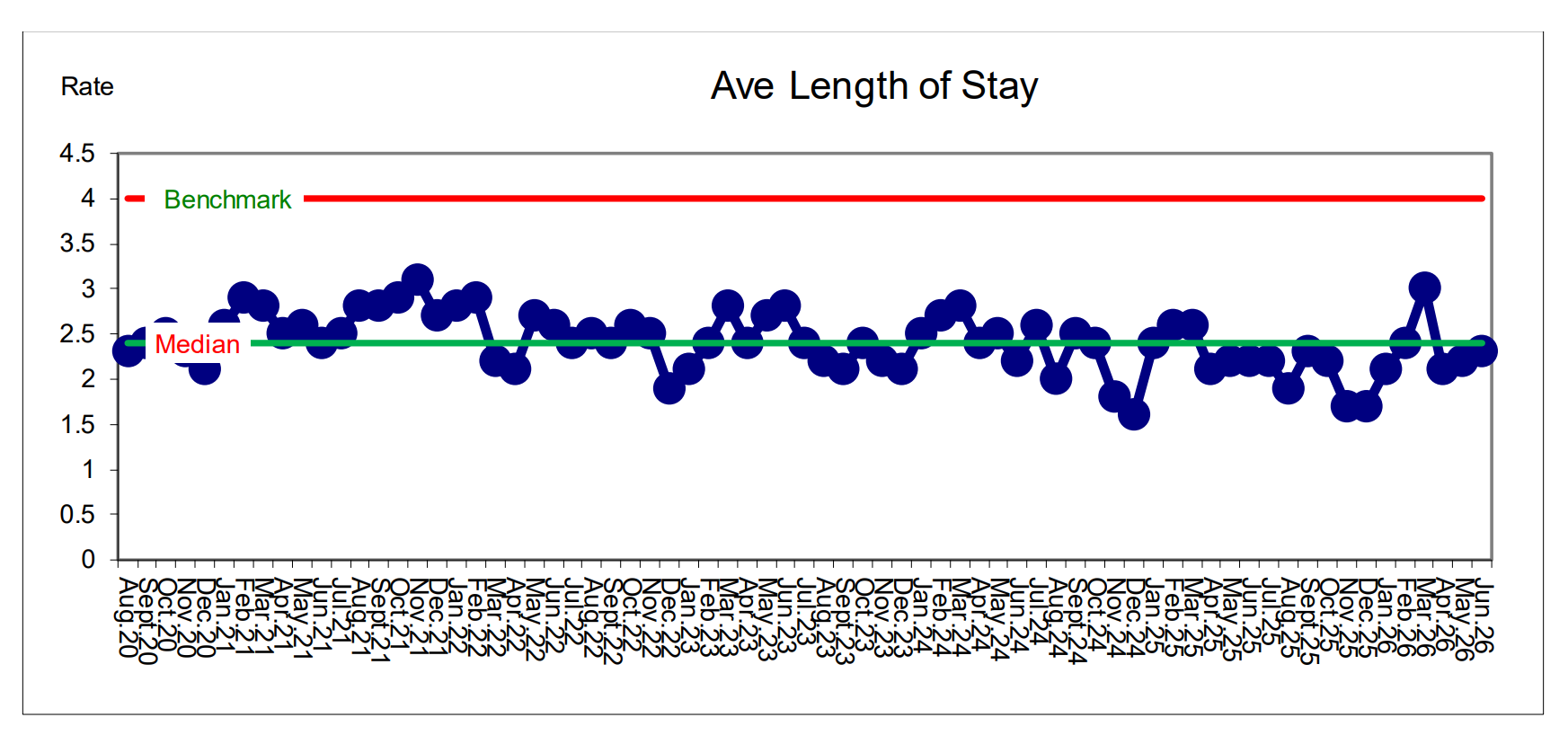
While severely ill patients will be admitted receiving care as inpatients, it is our desire that they spend the shortest time. Short hospital stay is desired to allow children to quickly join their parents and siblings in their familiar home environment and to reduce the cost of care.1 The inpatient average length of stay is a measure to evaluate how many days patients stay in our wards from admission to discharge. This is also an indirect measure of the effectiveness of care provided during hospitalization. We note that some patients may spend longer in the wards, but this measure is an average for all patients discharged per month.

As indicated in the graph below, Gertrude’s Children’s hospital has maintained low average length of stay.

What are we doing to improve?

It is our desire to maintain a low inpatient average length of stay without compromising the quality of clinical care provided. To this end we continue to review the conditions/diseases that have higher average length of stay, enhance the timeliness of diagnosis and initiate treatment as early as possible following diagnosis.

Note: the lower the number the better the performance.

Reference:

  1. Rotter T, Kinsman L, James EL, Machotta A, Gothe H, Willis J, Snow P, Kugler J. Clinical pathways: effects on professional practice, patient outcomes, length of stay and hospital costs. Cochrane Database of Systematic Reviews 2010, Issue 3. Art. No.: CD006632. DOI: 10.1002/14651858.CD006632.pub2. Accessed 18 November 2021.
Book Appointment