A hospital acquired infection (HAI) is an infection one acquires during their stay in the hospital. Most hospital acquired infections are diagnosed after 3 calendar days of staying in the hospital. Gertrude’s Children’s Hospital infection control team does investigations for all suspected infections to find out whether they fit to be HAI. It is important for us hospital to track the rates of infections because infections have undesired effects to families leading to long stays in hospitals, increased expenditure on medical bills, increased resistance to antibiotics, medical complications and death.
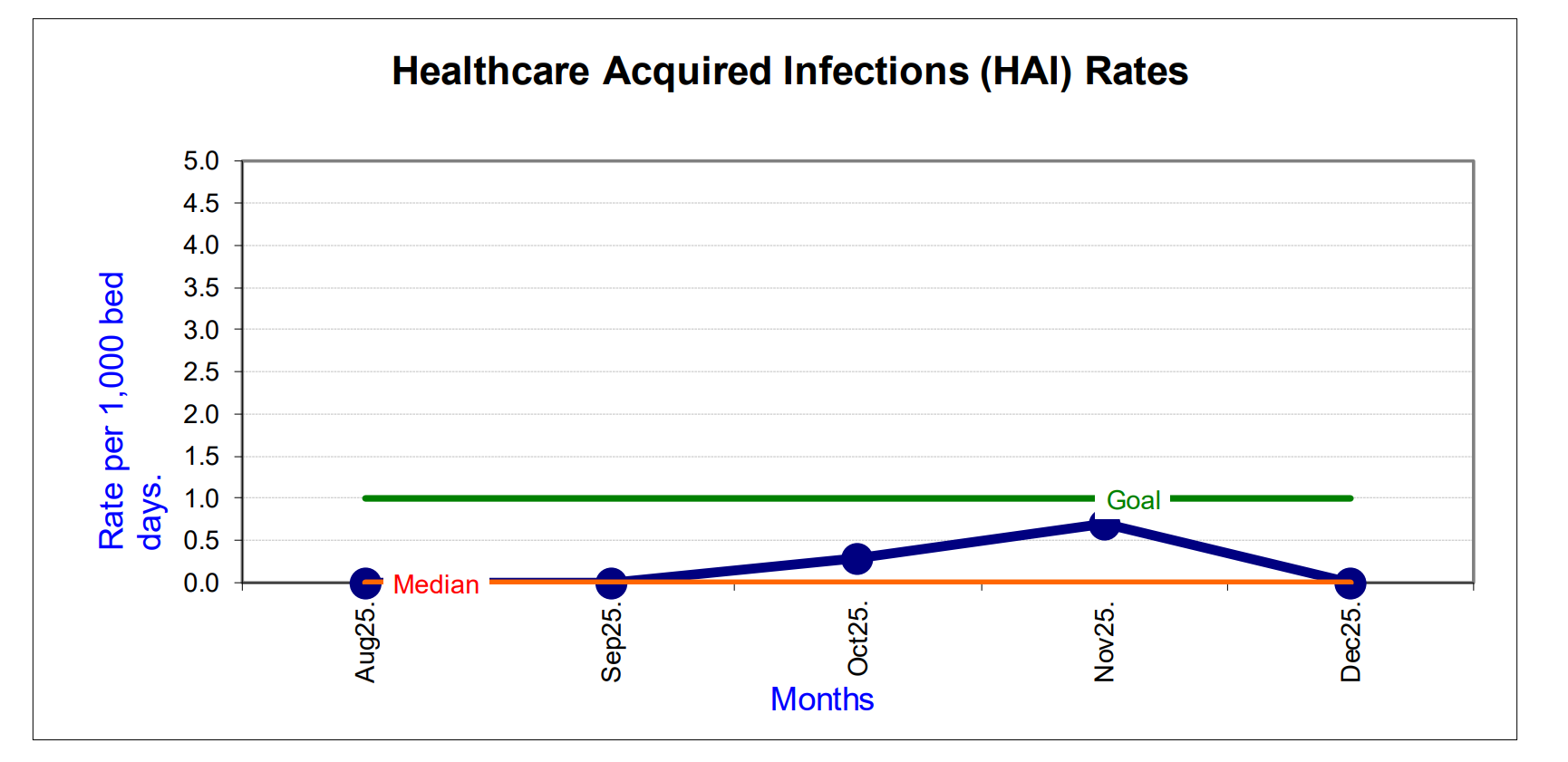
The hospital target for HAI is less than one infection for every 1,000 bed days. In October 2025 performance, the infection rate was recorded at 0.3 per 1,000 bed days. In absolute numbers, this statistical rate represented one (1) patient who acquired an infection during this month. In November 2025 again the infection rate rose to 0.7 per 1,000 bed days. This represents one (1) patient acquiring HAI during the month of November. Despite the slight increase in the rate from October to November, both months remained well below the hospital’s established Goal of 1.0 per 1,000 bed days. While the absolute number of cases remained consistent at one patient per month, the fluctuation in the “rate per 1,000 bed days” (from 0.3 to 0.7) indicates a change in the total number of bed days recorded between those two months.