A urine catheter is a tube fixed to the urinary tract to help drain urine from the bladder when one cannot do it naturally. Catheter associated infections occur when bacteria or other microorganisms enter through the urinary catheter and cause urinary tract infections if conditions during fixing or handling are not sterile. Catheter-associated urinary tract infections (CAUTI) can lead to complications; longer hospital stay and increased treatment costs. Since
CAUTIs can be prevented, it is part of Gertrude’s Children’s Hospital’s harm reduction program to have zero catheter associated urinary tract infections per 1,000 catheter days.
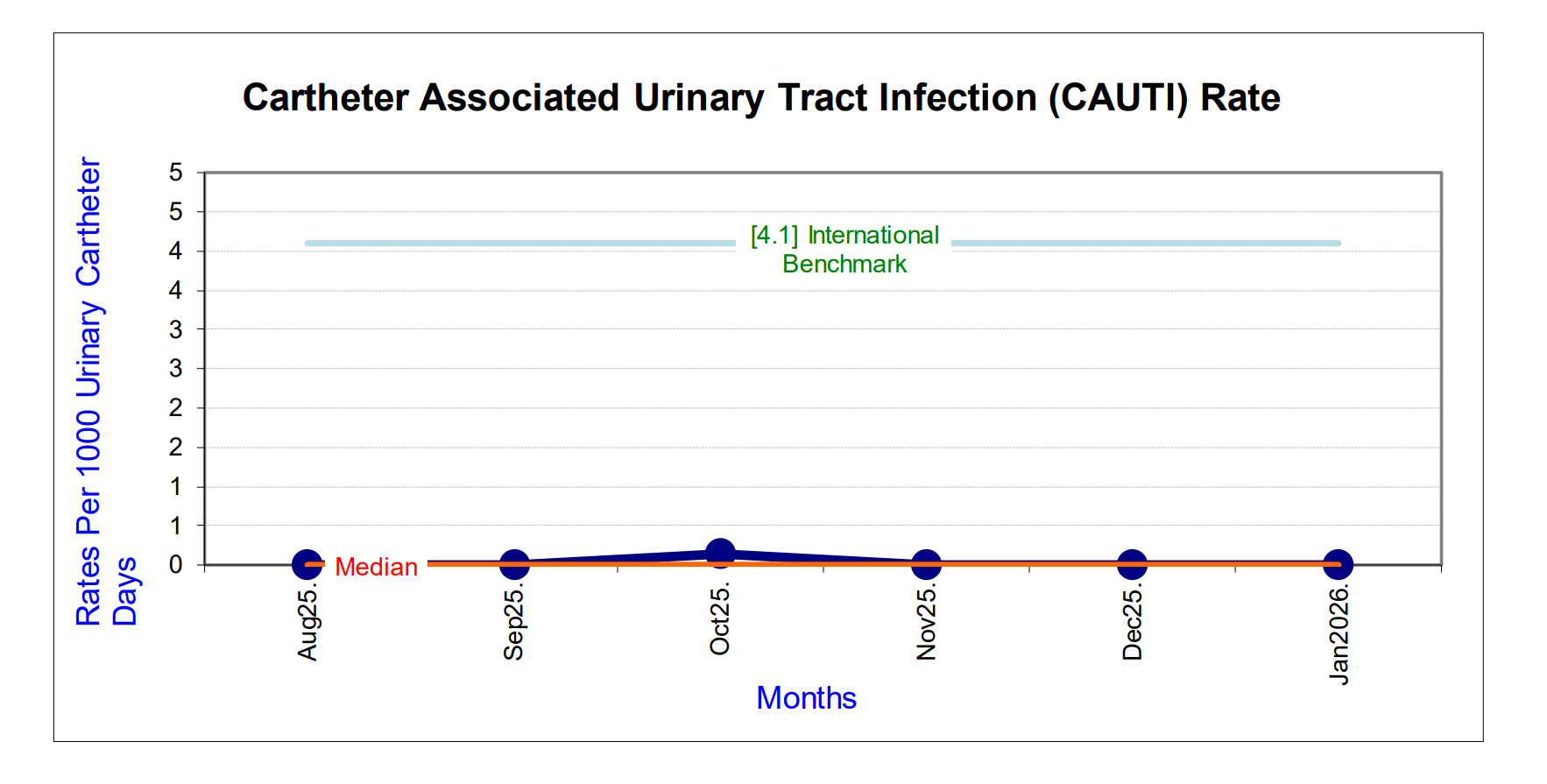
As indicated in the chart below Gertrude’s Children’s hospital has had 0.14 per 1000 catheter associated urinary tract infections per 1,000 bed days in the last 6 months. This
is against a benchmark of 4.1 per 1,000 urine catheter days (El-Saed, 2013). In absolute numbers this is one case.