There are numerous factors that contribute a patient’s return to the outpatient. Amongst these the hospital focuses on the unplanned returns to the emergency/ outpatient department within 3 days of the index visit due to non-improvement of the condition. An unplanned return/ reattendance to the OP may result in a worse presentation such as an emergency. This has a direct impact on the admission rate and the cost of care. It is regarded as a measure of the quality/ appropriateness of care rendered and discharge planning from the OP in the initial visit.¹,³
Acute Care Reattendance
Definition & why we measure

What are we doing to improve?
The measure necessitates a review of the patient’s pathway through the emergency department from the initial visit to identify potential gaps for improvement.
Staff training has been conducted (and is an ongoing process) with individualized feedback on patients’ outcomes that serve to improve the staff’s skills and in turn this measure. The hospital has availed resources for reference that are paediatric specific in the Standard Treatment Guidelines. Further to this, there are clear evidence-based
clinical pathways that describe important aspects of care for patients with similar diagnosis to standardized care.²
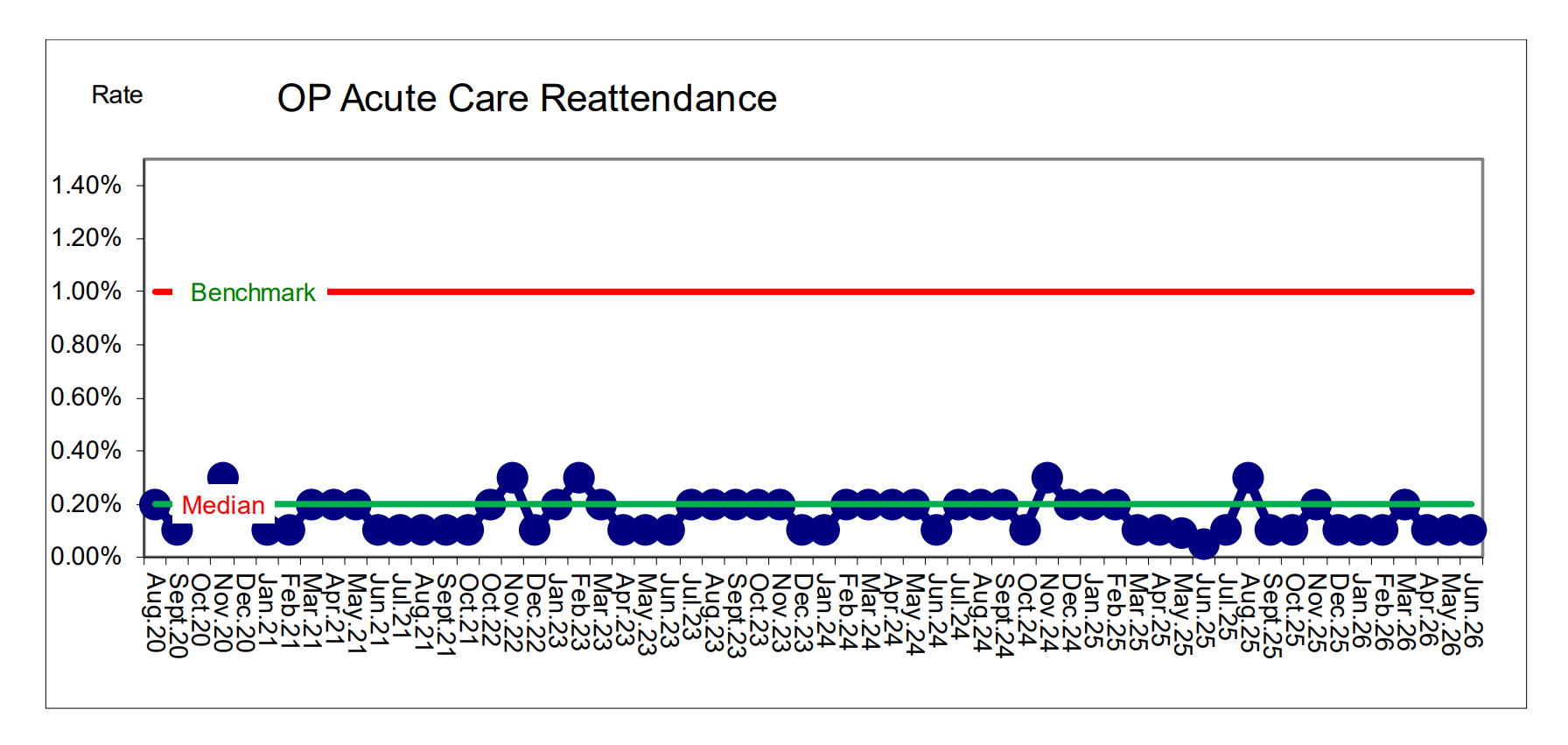
Note: the lower the number the better the performance.
Reference:
- Credé, S.H., O’Keeffe, C., Mason, S. et al. (2017). What is the evidence for the management of patients along the pathway from the emergency department to acute admission to reduce unplanned attendance and admission? An evidence synthesis. BMC Health Serv Res 1 7, 355 https://doi.org/10.1186/s12913-017-2299-8
- Rotter T, Kinsman L, James EL, Machotta A, Gothe H, Willis J, Snow P, Kugler J. Clinical pathways: effects on professional practice, patient outcomes, length of stay and hospital costs. Cochrane Database of Systematic Reviews 2010, Issue 3. Art. No.: CD006632. DOI: 10.1002/14651858.CD006632.pub2. Accessed 18 November 2021.
- Sun, Y., Heng, B.H., Tay, S.Y. et al. (2015) Unplanned 3-day re-attendance rate at Emergency Department (ED) and hospital’s bed occupancy rate (BOR). Int J Emerg Med 8, 32. https://doi.org/10.1186/s12245-015-0082-3