A central line is a catheter place in a large vein usually in the neck, chest, arms or groin. It allows healthcare workers to give medication, fluids and nutrition to patients. The lines directly access your blood stream and therefore increase the risk of infections if not handled correctly. A central line blood stream infection (CLABSI) occurs when bacteria or other microorganisms enter through the patient’s central line and then into the blood stream. The microorganism may cause an infection leading to prolonged hospital stay, increased cost of care, or medical complications. Gertrude’s Children’s Hospital targets to have zero infections resulting from central lines.
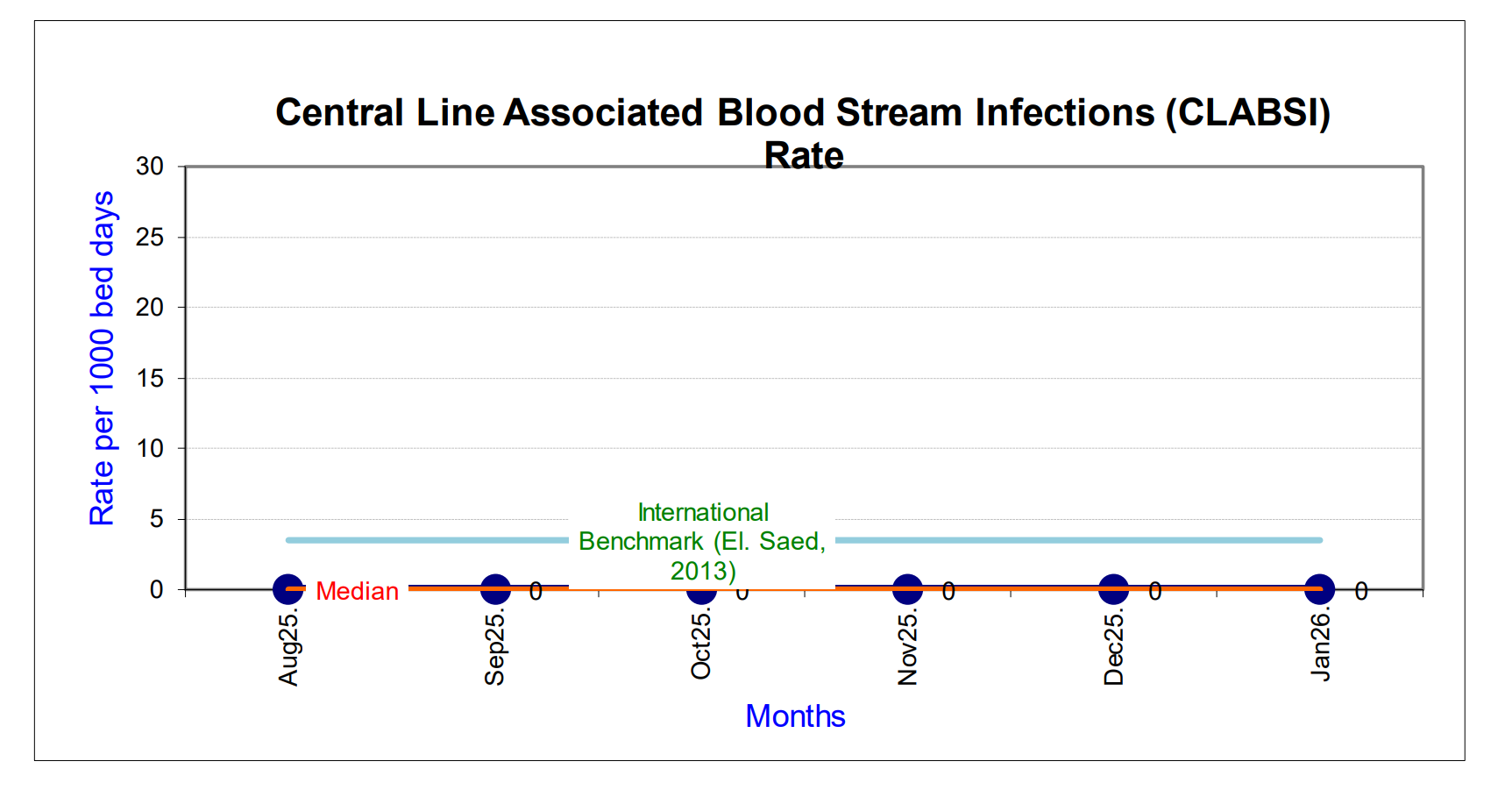
Gertrude’s Children’s hospital had zero cases of Central Line Associated Blood infections per 1000 bed days against a benchmark of 3.5. (El-Saed, 2013).