Benign paroxysmal positional vertigo (BPPV) is a condition that causes brief episodes of dizziness or vertigo, usually triggered by changes in head position. While BPPV is more common in adults, it can also occur in children. The vertigo is caused by small calcium particles (otoconia) that become dislodged from their normal location in the inner ear and move into one of the ear’s semicircular canals. These canals are responsible for detecting head motion and balance. When the otoconia disrupt the normal fluid movement in the canal, it can send incorrect signals to the brain, leading to dizziness or a spinning sensation. BPPV is typically harmless but can be disorienting and frightening for children.
Benign Paroxysmal Positional Vertigo (BPPV) in Children
- Overview
- Symptoms
- Causes
- Diagnosis
- Treatment Options
- Living with Benign Paroxysmal Positional Vertigo (BPPV) in Children
- Contact Us
Overview
Symptoms
The symptoms of BPPV in children are similar to those in adults but can sometimes be harder to recognize. Common symptoms include:
- Dizziness or vertigo: A sudden, intense sensation that the room is spinning, usually triggered by changes in head position (e.g., turning over in bed, looking up, or bending down).
- Nausea or vomiting: Children may feel sick to their stomach or vomit during or after an episode of vertigo.
- Balance problems: BPPV can cause brief episodes of unsteadiness or difficulty walking.
- Clumsiness: Younger children may appear clumsy or have trouble with coordination during an episode of vertigo.
- Fear or anxiety: Children may become scared or anxious because of the disorienting sensation of vertigo.
Causes
BPPV occurs when small calcium crystals (otoconia) that normally reside in another part of the inner ear become dislodged and enter one of the semicircular canals. These crystals interfere with the fluid in the canal, sending incorrect signals to the brain about head movements and balance. The exact cause of BPPV in children is not always clear, but it may be associated with:
- Head trauma or injury: A bump or blow to the head can dislodge the calcium particles, leading to BPPV.
- Inner ear infections: Some children may develop BPPV after an inner ear infection, which can affect the balance organs.
- Prolonged bed rest: Children who have been immobile for extended periods (e.g., due to illness or injury) may be at higher risk for developing BPPV.
- Unknown causes: In many cases, no specific cause for BPPV is identified, and it may occur spontaneously.
Risk Factors
Several factors increase the likelihood of developing allergic rhinitis, including:
- Family history of allergies: Children with parents who have allergies, asthma, or eczema are more likely to develop allergic rhinitis.
- Exposure to allergens: Being exposed to common allergens, such as pollen, dust mites, or pet dander, increases the risk.
- Asthma or eczema: Children with asthma or eczema are more likely to develop allergic rhinitis.
- Environmental factors: Children who live in urban areas with high pollution levels or who are exposed to tobacco smoke are at higher risk.
Diagnosis
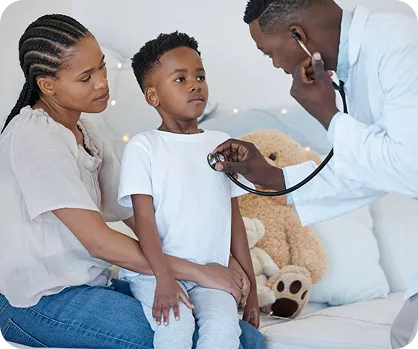
Diagnosing BPPV in children involves a careful evaluation by a healthcare provider, usually an ENT specialist or neurologist. The diagnostic process typically includes:
- Medical history: The doctor will ask about the child’s symptoms, including when the dizziness occurs, how long it lasts, and whether it is triggered by specific head movements.
- Physical examination: The doctor will observe the child’s eye movements and balance. Abnormal, rapid eye movements (nystagmus) are often a sign of BPPV.
- Dix-Hallpike maneuver: This specific test involves quickly moving the child’s head into different positions to trigger vertigo and observe nystagmus. The test helps confirm the diagnosis of BPPV and identify which ear is affected.
- Imaging tests: In most cases, imaging tests like an MRI or CT scan are not necessary for diagnosing BPPV, but they may be ordered if there is concern about other underlying conditions, such as a head injury.
Treatment Options
The good news is that BPPV in children is usually treatable, and most cases resolve with simple maneuvers or exercises that help move the displaced calcium crystals back to their correct position in the inner ear. At Gertrude’s Children’s Hospital, we offer the following treatment options:
- Epley maneuver:
The Epley maneuver is the most common treatment for BPPV and involves a series of specific head movements designed to guide the displaced calcium particles out of the semicircular canal and back into their proper location. The maneuver is usually performed in a doctor’s office and can provide immediate relief in many cases. Some children may need to perform the maneuver multiple times to fully resolve their symptoms. - Semont maneuver:
Another repositioning maneuver, the Semont maneuver, may be used to treat BPPV, particularly if the Epley maneuver is not effective. This maneuver also involves specific head and body movements to reposition the displaced crystals. - Brandt-Daroff exercises:
In some cases, children may be taught to perform Brandt-Daroff exercises at home. These exercises involve repeated head movements that help retrain the brain to adapt to the abnormal signals from the inner ear. These exercises may be recommended if symptoms persist or recur after other treatments. - Medication:
While BPPV itself is not treated with medication, anti-nausea or motion sickness medications may be prescribed to help manage symptoms such as nausea or vomiting during episodes of vertigo. - Observation:
In mild cases, BPPV may resolve on its own without any intervention. In such cases, the doctor may recommend observation and watchful waiting, especially if the symptoms are infrequent or mild. - Follow-up care:
After treatment, follow-up visits may be needed to ensure that the BPPV has resolved and that the child is not experiencing any ongoing balance issues or vertigo. In rare cases, if symptoms persist or recur, additional evaluation and treatment may be necessary.
Benign Paroxysmal Positional Vertigo (BPPV) in Children
No, BPPV is not dangerous, but it can be uncomfortable and disorienting for children. Fortunately, it is a treatable condition, and most children recover fully after treatment.
BPPV is typically treated with simple head maneuvers, such as the Epley or Semont maneuver, which help move the displaced calcium particles back into their correct position in the inner ear.
Yes, BPPV can sometimes recur, but most cases can be treated successfully with repeated maneuvers or exercises. If your child’s symptoms return, a follow-up visit with an ENT specialist may be necessary.
Most children experience relief from BPPV shortly after treatment, but some may need multiple treatment sessions or exercises at home. In most cases, BPPV resolves completely within a few days to a few weeks.
If your child complains of dizziness or vertigo, especially if it occurs with specific head movements, schedule a visit with a healthcare provider to determine if BPPV or another condition is causing the symptoms.
Contact Us
If your child is experiencing dizziness or vertigo, Gertrude’s Children’s Hospital is here to help. Our team of pediatric ENT specialists will provide expert diagnosis and treatment to ensure that your child can return to feeling balanced and healthy.
Contact us today to learn more about our Benign Paroxysmal Positional Vertigo (BPPV) in Children treatment options.
- Phone: +254-709-529-000, +254-733-645-000
- Email: Info@gerties.org
- Online Scheduling: https://www.gerties.org/book-appointment/